


Yestore
Why the Hisense 65‑inch MiniLED QLED feels like a living‑room upgrade
Why the Hisense 65‑inch MiniLED QLED feels like a living‑room upgrade
SKU:
Hurry Up! only 100 left in stock!
Couldn't load pickup availability


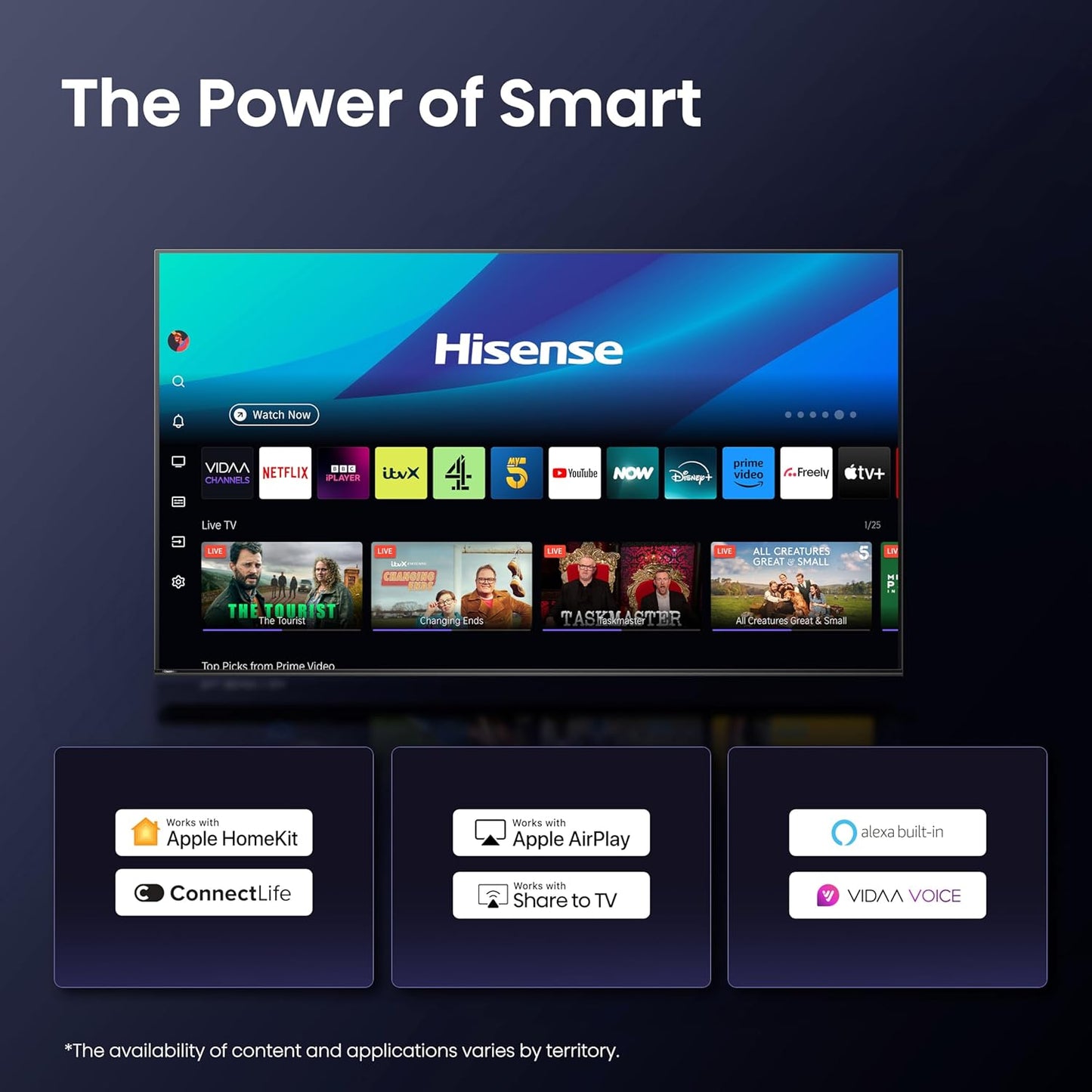

There’s something oddly satisfying about walking into a room and immediately feeling the picture pull you in. Not the kind of “wow” you get from a flashy ad, but a quiet confidence that the screen is doing its job right. The Hisense 65U7QTUK does exactly that – it sits there, 65 inches of MiniLED‑backed QLED, and lets the content speak for itself.

MiniLED and the whole “bright‑but‑deep” thing
MiniLED isn’t just a buzzword. By packing thousands of tiny LEDs into hundreds of dimming zones, the panel can crank up the brightness for those sun‑lit scenes while still delivering crushing blacks where you need them. Pair that with HDR1000 and you get a picture that feels like it’s actually brighter, not just “more saturated”. Most folks notice the difference right away – the colors pop without the glare you’d expect on a big TV.
AI‑driven upscaling – the Hi‑View AI Engine
Even if you’re watching a 1080p YouTube video, the Hi‑View AI Engine works behind the scenes, sharpening edges, tweaking contrast, and nudging the colour balance in real time. It’s not a miracle cure for low‑resolution content, but it does make the picture feel more cohesive. In practice, your favourite sitcom looks a touch cleaner, and the subtle textures in a nature documentary become more tangible.
Gaming on 144 Hz without the headache
When you plug a console in, the TV instantly flips into Game Mode PRO. The 144 Hz panel, combined with VRR (Variable Refresh Rate) and AMD FreeSync Premium PRO, means there’s barely any tearing or stuttering. Input lag is low enough that competitive players will barely notice it – a small but meaningful edge if you’re into fast‑paced shooters or racing sims.
- 144 Hz refresh rate keeps motion smooth.
- Auto‑detects gaming signals via ALLM.
- FreeSync Premium PRO reduces tearing.
Sound you can actually feel
Don’t be fooled by the sleek profile; the built‑in 2.1 channel system includes a punchy sub‑woofer. When you crank up Dolby Atmos or DTS Virtual X, the low frequencies rumble in a way that makes action movies feel less like a visual experience and more like an event. It’s not a full‑blown home‑theatre setup, but for a TV that’s integrated, it’s surprisingly immersive.
Everyday usability – apps, Wi‑Fi, and the rest
The smart platform is stocked with the usual suspects: Disney+, YouTube, Netflix, and a handful of other streaming services you’ll likely already have accounts for. Wi‑Fi connectivity is solid, though the remote could be a tad more ergonomic for those long browsing sessions. The included stand is sturdy, and the whole unit measures 32.6 D × 144.6 W × 89.6 H cm, fitting comfortably against a wall without dominating the space.

Pros & Cons
-
Pros
- MiniLED brightness and contrast that rivals higher‑priced models.
- 144 Hz panel with FreeSync for smooth gaming.
- Built‑in 2.1 channel audio with Dolby Atmos support.
- AI upscaling makes lower‑resolution content look better.
- Comprehensive streaming app selection.
-
Cons
- Remote feels a little generic; power‑button placement could be improved.
- While the built‑in speakers are good, audiophiles may still want a separate sound system.
How it stacks up against the competition
Compared with the Samsung Q70A (also a 144 Hz QLED), the Hisense offers MiniLED backlighting, which gives it a slight edge in peak brightness and black depth. The Samsung model usually has a more polished Tizen interface, but the Hisense’s AI engine and built‑in Atmos sub‑woofer level the playing field for most households. If you’re looking at Sony’s X90J, you’ll find the Sony excels at colour accuracy out of the box, yet it lacks the MiniLED dimming zones that give the Hisense its punchy contrast.
Final thoughts
All in all, the Hisense 65U7QTUK feels like a thoughtfully engineered TV that doesn’t try to overpromise. It’s bright enough for daytime viewing, dark enough for movie nights, and fast enough for gamers who demand responsiveness. The few minor drawbacks – a modest remote and the fact that true‑hi‑fi audio lovers will eventually want a soundbar – are outweighed by the overall package. If you’re in the market for a sizable screen that balances picture, performance, and price, this MiniLED QLED deserves a serious look.

What you cover in your shipping policy and how you communicate it will be highly dependent on your current business operations and supply chain. The goal is to be transparent with customers.
As 2020 brings unforeseen shipping delays and increased carrier costs, it's more important than ever to keep your shipping policy up to date with the following key points in mind:
- Essential shipping details are easy to find. While it is common practice to keep a link to your shipping policy page in the footer of your website, consider how you can also surface important shipping details in the right place at the right time (e.g. on your product page or website banner).
- Clear and concise presentation. Don’t make customers comb through your shipping policy page for the information they need. Whenever possible, make it easy to navigate with clear subheadings, tables, bolded text, and links to learn more.
- Order processing times. After an order is placed, how many days will it take to get it ready to ship? It’s worth communicating if you’re excluding weekends and/or holidays, and if you have certain cutoff times for processing orders (e.g. orders received after 5pm will be processed the next business day). If changes occur within your supply chain, due to peak periods or as a result of COVID-19, you should update your processing times to reflect it.
- Domestic and international shipping options. What are the qualifying regions for your domestic shipping options? International shipping can be broken down in its own section where you list the countries you ship to and estimated delivery timelines. If you offer several shipping options, you can list them in a table so the information is easy to scan. Shipping costs. Break down your shipping costs for the customer. If you have a free shipping threshold, you can communicate in various places as an incentive for customers. Any potential surprise fees should be surfaced too, such as duties and taxes the customer may incur.
| Size Name |
50 inches, 55 inches, 65 inches, 75 inches, 85 inches, 100 inches |
|---|